


Key cabinets for schools and TAFE colleges are lockable, wall-mounted units that store, sort and track every key a campus issues, with the goal of stopping lost-key lockouts and keeping unauthorised staff, students or contractors out of classrooms, labs and plant rooms. A 12-classroom primary school with one admin office needs a different setup than a TAFE campus running night classes across six buildings with rotating casual tutors, and the cabinet that fits one will bottleneck the other by term two.
- Key cabinets for schools work best when sized to actual key count, not classroom count — audit before you buy.
- Diplomat KC64 key cabinet suits single-office primary schools; Secuguard AP-534EK suits TAFE campuses needing logged, multi-staff access.
- Electronic locking adds a time-stamped audit trail insurers and WHS reviewers ask for after a 2026 lost-key incident.
- Bolt every key cabinet into a stud or masonry wall — one screwed only into plasterboard comes off with a crowbar.
Why key cabinets matter for schools and TAFE colleges
A school key ring is not one key doing one job. It covers classrooms, gates, gymnasiums, storerooms, chemical stores, server rooms and often a petty cash or till drawer in the front office. TAFE campuses add trades workshops, night-class entries and contractor access on top of that, with staff rotating every semester rather than every few years.
That turnover is the real difference from a home or small-office setup. A safes for schools and educational institutions policy that covers cash and document storage still leaves the daily key traffic problem unsolved — dozens of staff need fast access to the right key without a paper trail nobody checks. A key cabinet fixes the access side; a safe fixes the storage side. Most campuses eventually need both.
Audit your current key holdings
Do this before you look at any cabinet. Undercounting keys is the single most common reason a school buys a cabinet in 2026 and outgrows it by 2027.
- List every door, gate and cupboard with a lock, not just classrooms
- Note which keys are duplicated across multiple staff
- Separate master keys from sub-master and single-door keys
- Flag any door where a key was lost and the lock was never re-cored
- Split staff keys from cleaner, contractor and casual-tutor keys
Set an access policy before you buy a cabinet
A cabinet without a policy is just a decorative box. Decide the rules first, then size the hardware to match.
- Require sign-out (paper or digital) for every master key removal
- Set dual sign-out for keys to drug storage, cash offices or server rooms
- Fix a return-by time for keys borrowed during the school day
- Document what happens when a key is not returned by the deadline
- Name one person as key custodian, even in a large TAFE administration team
Choose the right cabinet capacity
Count hooks, not classrooms. Schools routinely miss gate keys, hall keys, storage-shed keys and spares when they estimate capacity from a floor plan alone.
- Add 20-30% headroom to your counted total for future keys, not the classroom count
- Group keys by department so the cabinet layout matches how staff actually search
- Keep master keys on a separate row or tier from single-door keys
- For a single-office primary school, a compact cabinet like the Diplomat KC64 key cabinet covers most needs
- For a multi-building TAFE campus, plan for a mid-to-high-capacity unit rather than two small ones
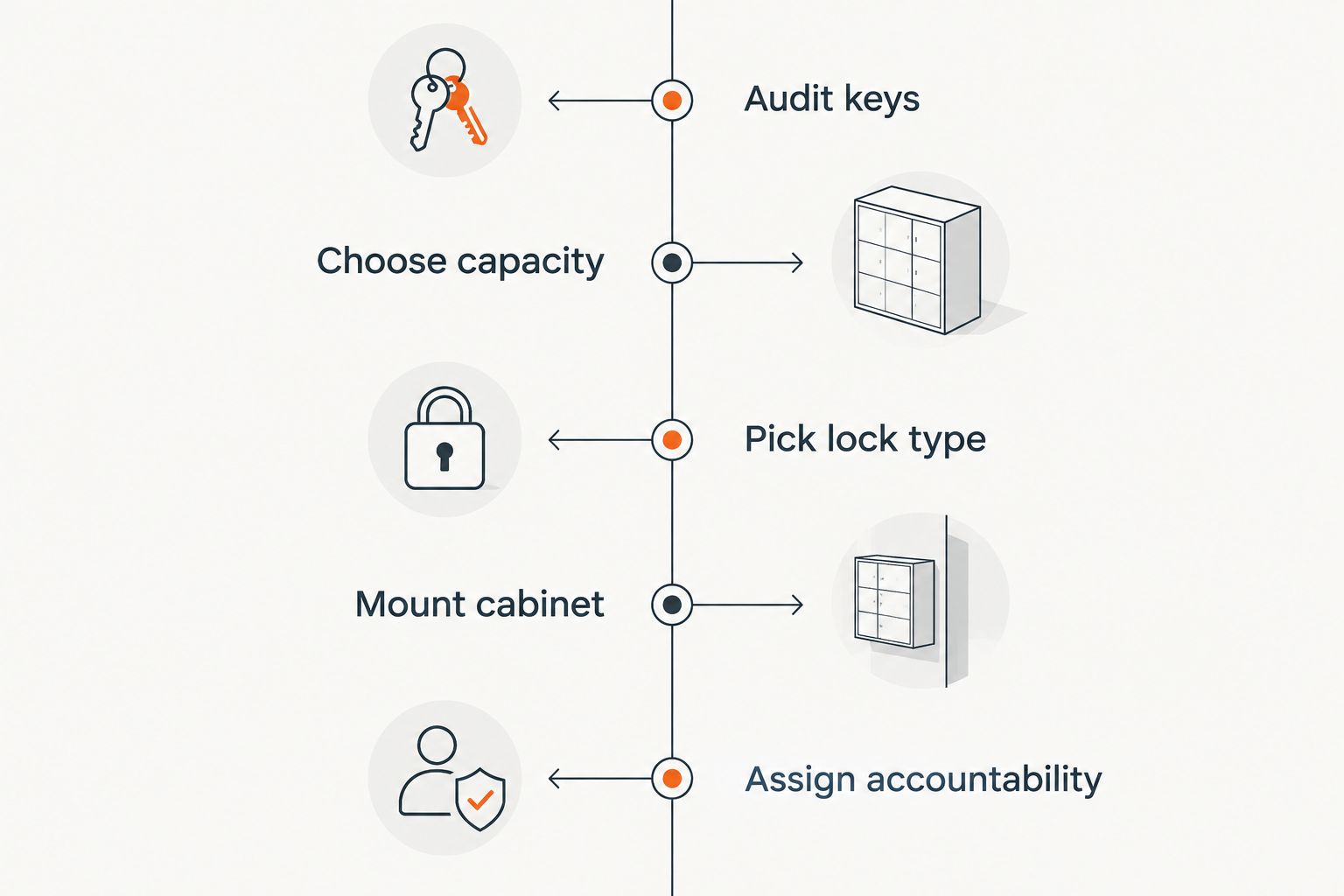
Pick mechanical or electronic locking
The manual route works and costs less: a mechanical key cabinet with one master key and a paper sign-out sheet on a clipboard next to it. It suits a primary school office with one custodian checking the sheet each afternoon.
Electronic locking is the faster, more accountable path once more than a handful of staff need access. A PIN or fob-based cabinet logs every opening automatically, which matters most for TAFE campuses with casual tutors, cleaners and contractors cycling through on different schedules.
- Mechanical: lower cost, no power required, single point of failure if the master is copied
- Electronic: automatic time-stamped log, per-staff PIN or fob, easy to revoke access when someone leaves
- Electronic cabinets need a designated administrator to manage codes, not just a key custodian
- Mechanical suits stable, small staff counts; electronic suits rotating, larger staff counts
- Either type still needs a written lost-key procedure — logging doesn't replace policy
Mount and secure the cabinet
The cabinet is only as secure as the wall it's screwed into. This is the step most schools rush.
- Bolt through the backplate into a stud or masonry, never plasterboard anchors alone
- Position it away from external windows and doors, not in the first room past reception
- Keep the room it sits in locked whenever the office is unattended
- Mount at staff reach height, not at a height students walking past can see or touch
- For high-value master keys, consider a room with restricted swipe-card access as a second layer
“A key cabinet bolted only into plasterboard is a suggestion, not a barrier.”
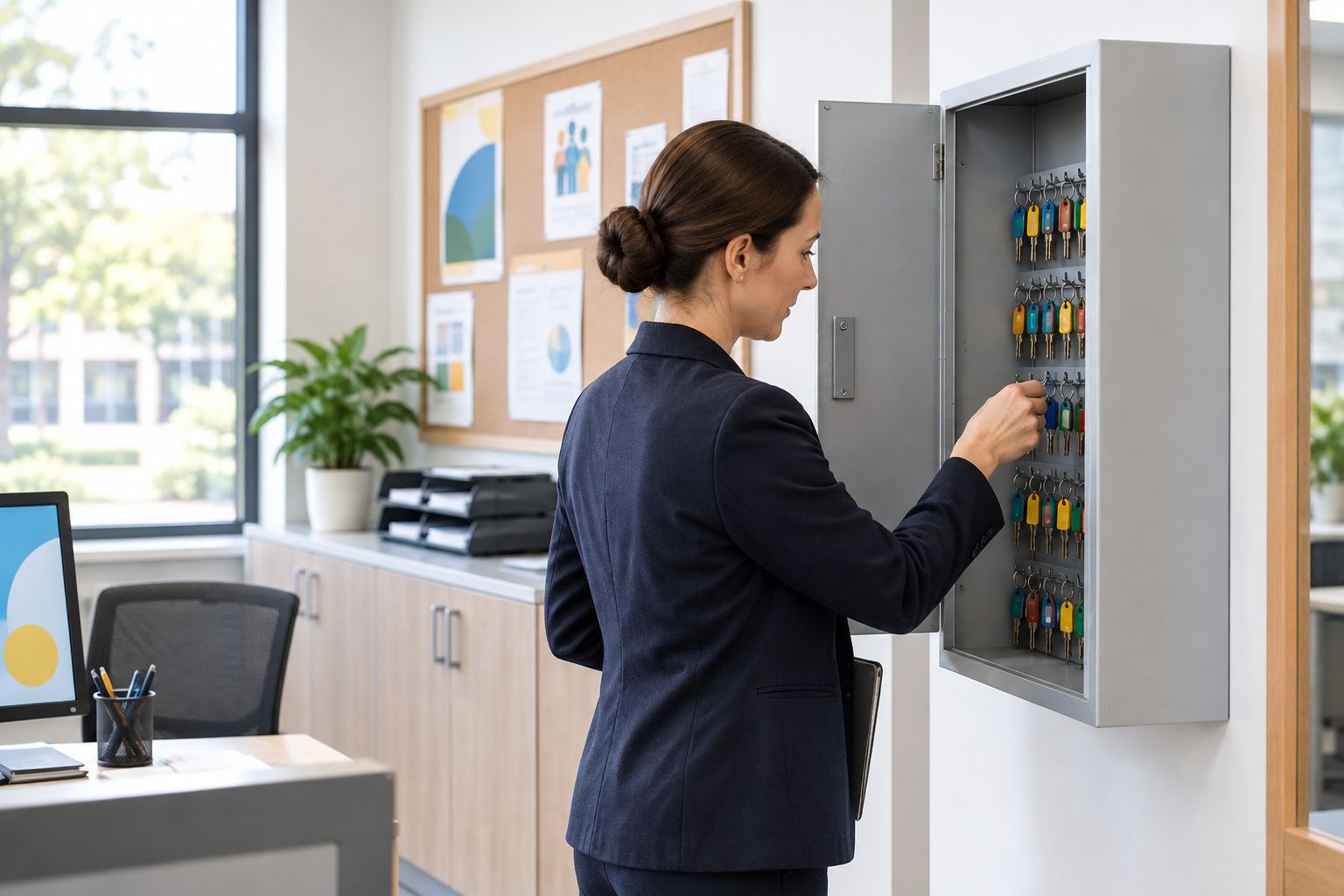
Assign accountability with logging
A cabinet without a named custodian drifts into chaos within a term, especially once relief staff start borrowing keys.
- Name one key custodian per campus or per building
- Require ID or PIN entry for every removal on electronic units
- Run a quarterly reconciliation of physical keys against the register
- Flag any key not returned within its sign-out window automatically
- Keep a written incident procedure ready for a lost or stolen key, including who authorises re-coring
Train staff and review the policy each term
Policy only works if new staff know it exists. Casual relief teachers and short-term contractors are the group most likely to skip the sign-out sheet entirely.
- Brief every new hire and relief teacher on key procedure during induction, not after an incident
- Revoke electronic codes the same day a staff member's contract ends
- Walk through the lost-key procedure once a year with the whole admin team
- Recheck cabinet capacity every time enrolments or staffing changes materially
Comparing key cabinet options for schools and TAFE colleges
| Option | Best for | Capacity | Key limitation |
|---|---|---|---|
| Diplomat KC64 key cabinet | Single-office primary schools with one custodian | Small to mid-size | No automatic log; relies on a paper sign-out sheet |
| Platinum MX30 key cabinet | Front office or admin blocks wanting a simple mechanical option | Small to mid-size | Losing the master means re-keying every lock on that master |
| Secuguard AP-534EK electronic key cabinet | TAFE campuses with rotating staff, contractors and casual tutors | Mid to high-capacity | Needs power/battery backup and a designated code administrator |
Verdict: a single-office primary school is well served by a mechanical cabinet like the Diplomat KC64; a multi-building TAFE campus with rotating staff gets more value from an electronic, logged unit like the Secuguard AP-534EK.
Common mistakes schools make with key cabinets
- Sizing the cabinet to classroom count instead of actual key count, then running out of hooks by term two
- Screwing the cabinet into plasterboard instead of a stud or masonry wall
- Never revoking electronic PIN access when a staff member's contract or semester ends
- Storing the master key list on paper inside the same room as the cabinet it describes
- Treating the cabinet as a one-off 2026 purchase instead of reviewing capacity every time staffing or enrolments shift
FAQ
What's the best key cabinet for a small primary school office?
A mechanical cabinet like the Diplomat KC64 key cabinet suits a single-office primary school with one key custodian and a stable staff count. It skips the power and admin overhead of an electronic system that a small office doesn't need.
Is an electronic key cabinet better than a mechanical one for a TAFE college?
For most TAFE campuses, yes, because electronic locking logs every removal automatically across rotating trades staff, contractors and casual tutors. A mechanical cabinet still works if the campus has a small, stable staff list.
How many keys does a school actually need to track?
It varies by campus, which is why an audit of every door, gate and cupboard comes before buying a cabinet. Undercounting from a floor plan alone is the most common reason schools outgrow their first cabinet.
Do key cabinets need to be bolted to the wall?
Yes. A cabinet fixed only with the supplied screws into plasterboard can be pulled off the wall in seconds; bolting through the backplate into a stud or masonry is the baseline for any school setup.
What happens if a master key goes missing at a school?
Every lock on that master needs re-coring or re-keying, which is expensive and disruptive across a campus. This is why dual sign-out and a named custodian matter more for master keys than for single-door keys.
Can a key cabinet double as storage for cash or documents?
No. A key cabinet is built for daily access to keys, not fire or burglary protection for cash and paperwork. Schools handling cash or sensitive records need a separate fireproof or burglary-rated safe alongside the key cabinet.
Is a key cabinet enough on its own for school security?
A key cabinet solves daily access and accountability for keys, not overall campus security. Most schools pair it with locked storerooms, restricted-access admin areas and a proper safe for cash or records.
One last thing
If a TAFE campus already runs swipe-card access on most classroom doors, the keys still worth auditing hard are the ones swipe cards don't cover — plant rooms, chemical stores and any safe on site. Those three get missed in most 2026 key audits because staff assume swipe-card coverage means the whole building is accounted for, and it isn't.