


Best for a requirement specifying Class A: an approved Class A container. Best for a requirement specifying Class B: an approved Class B container. Best for a requirement specifying Class C: an approved Class C container. This 2026 guide explains the SCEC class hierarchy and how to choose safes without confusing government approval, burglary resistance and fire protection.
- SCEC means Security Construction and Equipment Committee; its approval is not a general-purpose burglary or fire rating.
- Class A, Class B and Class C containers are different protective categories, not interchangeable purchasing options.
- Securitysafes buyers should match the exact container and lock configuration to their security authority’s written requirement.
- Check the SCEC Security Equipment Evaluated Products List before selecting government or defence storage.
Why this matters
A safe described as heavy-duty, commercial or fire-resistant is not automatically SCEC-approved. Those descriptions answer different questions. Buying against the wrong description leaves you with storage that does not meet the requirement you were given.
SCEC is the Security Construction and Equipment Committee. Its security equipment evaluation arrangements support Australian Government protective security requirements; they are not a universal ranking system for every safe sold in Australia.
For ordinary residential or business purchasing, start with the Safes Australia buying guide. For a government or defence requirement, start with the responsible security authority’s specification instead.
For Securitysafes safes buyers with government storage requirements, the best choice is the exact SCEC-approved container configuration their security authority specifies. A higher-sounding description is no substitute for that match.
What makes the best SCEC-approved safes?
The best SCEC-approved safe meets the required protective category and remains suitable when installed and used. Assess these criteria before comparing dimensions or convenience features:
- Required class: Match the specified Class A, Class B or Class C category. Do not substitute a lower class because the cabinet looks similar.
- Exact approval: Check the manufacturer, model and relevant configuration against the SCEC Security Equipment Evaluated Products List, commonly called the SEEPL.
- Lock configuration: Confirm the nominated locking arrangement. A product-family name does not establish that every lock option is acceptable.
- Storage purpose: Establish what you will store and which organisational requirements apply. Classified information, cash and paper archives do not create identical purchasing needs.
- Installation conditions: Check siting, anchoring and any other conditions attached to the equipment or your organisation’s specification.
- Separate protection needs: Assess fire protection, burglary resistance and insurance requirements independently rather than treating SCEC approval as proof of each.
In 2026, use the current official equipment information and your organisation’s current security instructions. An old brochure is useful background, not a purchasing authority.
SCEC container classes at a glance
The hierarchy below compares protective categories, not individual products. It does not assign SCEC approval to any retail model. Class A sits above Class B, which sits above Class C in this class hierarchy, but the correct purchase is the class required for your application.
| Ranked category | Best for | Standout distinction | Key limitation |
|---|---|---|---|
| Class A approved container | Applications expressly requiring Class A | Highest protective category among these classes | Class alone does not establish suitability for every storage environment |
| Class B approved container | Applications expressly requiring Class B | Intermediate protective category | Not interchangeable with Class A where Class A is required |
| Class C approved container | Applications expressly permitting Class C | Lower protective category for authorised applications | Not a substitute for Class B or Class A requirements |
Read the table as a decision tree. First identify the permitted category; then compare approved configurations within it. Do not turn the table into a claim that every Class A container is the best safe for every buyer.
1. Class A containers: best for specified Class A requirements
A SCEC-approved Class A container belongs at the top of this class-based comparison. Its role is to meet a Class A storage requirement, not to win an all-purpose comparison against home or commercial safes.
Choose Class A when your responsible security authority specifies it. Confirm the exact equipment entry and installation conditions before committing to a particular configuration.
Class A pros:
- Matches applications that expressly require this protective category.
- Provides a clear class requirement for comparing eligible equipment.
- Prevents a lower-category cabinet being treated as an equivalent substitute.
Class A cons:
- Does not remove the need to check the exact model and lock configuration.
- Does not automatically establish fire protection or insurance acceptance.
- Does not replace the security controls required around the container.
Best for: Buyers working to a written Class A storage specification.
Do not select Class A merely because it is first in a ranking. Your security authority still needs to confirm that the container suits the intended information, location and operating arrangements. The strongest category on a comparison page is not a complete security design.
Verdict: Buy an exact approved Class A configuration when Class A is specified; hold until the requirement and configuration are confirmed.
2. Class B containers: best for specified Class B requirements
A SCEC-approved Class B container occupies the intermediate category in this comparison. It is the appropriate shortlist when your organisation’s requirement calls for Class B and the proposed equipment matches the relevant approval.
Do not infer that Class B is equivalent to a commercial burglary grade with a similar-looking letter or number. SCEC classes and commercial safe ratings serve different purposes.
Class B pros:
- Matches applications expressly requiring Class B.
- Keeps equipment selection tied to a defined protective category.
- Supports comparison of eligible container layouts and locking arrangements within that category.
Class B cons:
- Does not satisfy a Class A requirement simply because the cabinet is substantial.
- Requires separate checks for fire protection and other storage risks.
Best for: Buyers whose responsible security authority specifies Class B storage.
For a 2026 purchase, ask for the precise model designation and locking arrangement in writing. Keep that information with the procurement record so the equipment ordered, delivered and accepted can be matched without relying on a sales description.
Verdict: Buy an exact approved Class B configuration for a confirmed Class B requirement; skip it as a substitute for required Class A storage.
3. Class C containers: best where Class C is expressly permitted
A SCEC-approved Class C container is the lower protective category in this comparison. It belongs on your shortlist only where your organisation permits that class for the intended use.
Class C is not a general recommendation for sensitive material simply because it carries a recognised class label. The permitted use, equipment configuration and surrounding security arrangements still govern the decision.
Class C pros:
- Matches applications that expressly permit Class C.
- Gives buyers a defined category rather than a vague security description.
- Allows practical layout and access needs to be assessed within the authorised category.
Class C cons:
- Is not interchangeable with Class B or Class A.
- Does not establish protection against every threat to the contents.
Best for: Buyers with written confirmation that Class C is acceptable.
Avoid calling Class C the budget winner. That wording encourages selection on the wrong basis. Approval fit comes first, and commercial terms do not change the category your security authority requires.
Verdict: Buy an exact approved Class C configuration only where Class C is authorised; skip it where a higher class is required.
How this ranking works
This ranking orders the SCEC container classes by protective category: Class A, then Class B, then Class C. The recommendations follow the criteria above: required class, exact equipment approval, locking arrangement, storage purpose and installation conditions.
It is not a product test or a model-by-model performance league table. A useful product comparison begins after your security authority identifies the required class and acceptable configurations. Only then do dimensions, layout and daily access become sensible tie-breakers.
Check approval before choosing a model
Use the Australian Security Intelligence Organisation’s SCEC equipment information and SEEPL as the official reference for equipment evaluation. Apply that information alongside your organisation’s security requirements, rather than relying on a retailer’s category heading alone.
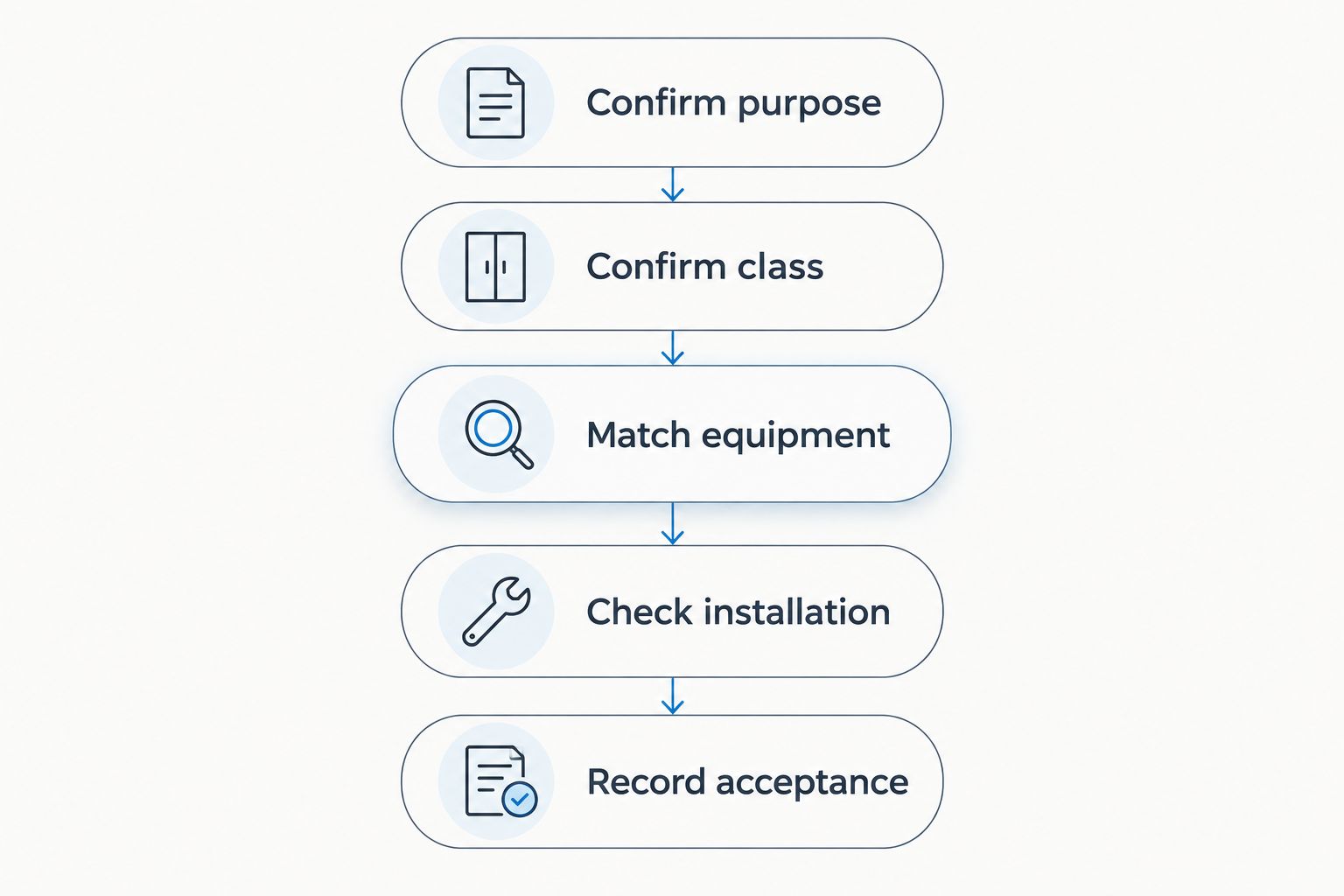
For a 2026 procurement decision, make these checks in order:
- Confirm purpose: Record what the container will hold and who owns the storage decision.
- Confirm class: Obtain the required protective category from the responsible security authority.
- Match equipment: Compare the exact manufacturer, model and locking arrangement with the relevant official entry.
- Check installation: Resolve siting, anchoring and any conditions before ordering.
- Record acceptance: Keep the equipment details and authorised decision with the purchase record.
Ask for documentation that identifies the equipment, rather than a statement that the supplier handles approved products. A supplier’s broader range does not prove that the particular cabinet and lock you are ordering meet your specification.
For further application guidance, read SCEC-approved safes for government and defence use. Keep the official equipment entry and your security authority’s decision as the purchasing references.
SCEC approval is not a burglary or fire rating
Different rating systems answer different questions. Treating them as interchangeable creates a comparison that looks precise but tells you little about whether the safe suits your contents.
| Evidence or requirement | What it helps establish | What you must not assume |
|---|---|---|
| SCEC equipment evaluation | Suitability within the relevant government protective security arrangements | Universal fire protection or insurance acceptance |
| Burglary test certification | Resistance under the named test standard and grade | Automatic SCEC approval |
| Fire test certification | Protection under the named test conditions and contents category | Equivalent burglary resistance |
| Insurer’s written requirements | Conditions relevant to the proposed insurance cover | Government storage approval |
A paper record and an electronic storage device do not necessarily need the same fire protection. Likewise, an insurer’s acceptance does not decide whether a container meets a government storage requirement.
Securitysafes safes buyers should compare each protection claim with the evidence that supports it. Keep the certificate, standard or written requirement attached to the correct claim; do not combine unrelated labels into an invented overall score.
Compare practical fit after approval fit
Once the class and equipment configuration are settled, check whether the container works in its intended location. Measure the space and the delivery route, then check the manufacturer’s dimensions rather than estimating from photographs.
Useful fit checks include:
- Internal clearance: Measure the actual folders, packages or other authorised contents.
- Door movement: Check the space needed to open the door and use the interior.
- Delivery access: Review doorways, corners, stairs and lifts along the route.
- Supporting structure: Confirm the location can support the proposed equipment and installation.
- Access arrangements: Identify authorised users and the process for controlling credentials.
Obtain 2 measurements for each bulky item: its width and depth. Add height where shelves or internal compartments constrain it. This is a purchasing check, not a claim about any container’s capacity.
Do not let a convenient footprint override an approval requirement. If the permitted equipment does not fit, resolve the location or equipment options with the responsible authority before purchasing.
Which SCEC-approved safe should you choose?
Choose the exact approved container class and configuration specified for your application. Class A is the highest category in this comparison, but it is not the default answer for every buyer. Class B and Class C are appropriate only where the applicable requirement permits them.
For a 2026 shortlist, keep 3 records together: the written storage requirement, the relevant equipment approval information and the installation specification. Obtain 1 written acceptance decision from the responsible security authority before treating the selection as settled.
If you are buying for ordinary home valuables or business cash rather than a government storage requirement, compare safes against those risks directly. Do not pursue a SCEC label as a substitute for burglary evidence, suitable installation or the insurer’s conditions.
FAQ
What does SCEC stand for?
SCEC stands for Security Construction and Equipment Committee. Its equipment evaluation arrangements support Australian Government protective security requirements; SCEC is not a general-purpose fire or burglary rating.
What is the best SCEC-approved safe?
The best SCEC-approved safe is the exact approved class and configuration specified by your responsible security authority. Check the manufacturer, model, locking arrangement and applicable installation conditions before purchasing.
Is Class A higher than Class B and Class C?
Class A is the highest protective category among the Class A, Class B and Class C containers compared here. The required category still depends on your authorised storage requirement, not on a preference for the highest label.
Can I use a Class C container instead of Class B?
Do not substitute Class C where Class B is required. Obtain the responsible security authority’s approval for the exact container category and configuration before making a substitution.
How do I check whether a safe is SCEC-approved?
Check the exact equipment against the SCEC Security Equipment Evaluated Products List and the relevant official equipment information. Match the model and locking arrangement, then confirm suitability with your responsible security authority.
Does SCEC approval mean a safe is fireproof?
SCEC approval does not establish a safe’s fire protection. Assess fire protection through the relevant test evidence, including the contents category and conditions covered.
Can Securitysafes product descriptions establish government storage approval?
A retail product description alone does not establish government storage approval. Use the exact official equipment entry and your responsible security authority’s requirements to confirm the proposed configuration.
One last thing
Put the exact model and lock configuration on the purchase order. A correctly chosen class can still lead to the wrong purchase if the order uses only a broad product-family name.
Carry those details through delivery and acceptance. The final check is not whether the cabinet looks secure; it is whether the equipment received matches the equipment authorised.