


Yes, you can claim a home safe as a tax deduction in Australia when you use it to earn assessable income, but only the income-producing share is deductible. The purchase is generally a capital asset, so you usually claim depreciation unless an applicable immediate-deduction rule allows another treatment. For a 2026 claim, the safe’s location at home does not decide eligibility; its use, ownership and supporting records do.
- Can you claim a home safe as a tax deduction? Yes, for substantiated income-producing use, not private storage.
- A home safe generally attracts depreciation; an immediate deduction requires separate eligibility checks.
- Mixed business and personal storage requires a reasonable, documented allocation of use.
- Securitysafes sells safes for Australian home and business buyers; tax eligibility depends on your circumstances.
Can you claim a home safe as a business tax deduction?
A safe used to protect business cash, records or equipment can qualify for a deduction, even when it sits in your home. A safe used only for family jewellery, passports or personal savings does not qualify as a business deduction.
Start with the business purpose, not the product label. The Safes Australia buying guide covers selection; the tax question is whether your actual use connects the asset to earning income.
| How you use the safe | General tax position | Evidence to retain |
|---|---|---|
| Exclusively for business cash, stock or records | Income-producing use supports a claim, subject to the applicable asset rules | Invoice, ownership records and explanation of business use |
| For business records and household valuables | Only the income-producing portion qualifies | Contents records and a reasonable allocation method |
| Exclusively for private valuables | No business deduction | Purchase records for personal ownership and insurance purposes |
| For employment-related materials | Separate employee deduction rules apply | Evidence of work necessity, payment and no reimbursement |
These are general Australian income-tax principles, not an approval for a particular purchase. The Australian Taxation Office’s guidance on depreciating assets, business deductions and private-use adjustments provides the framework for a 2026 claim.
Why this matters
Buying a safe and claiming a safe are separate decisions. You need security suited to the contents, then tax treatment suited to the asset and the way you use it.
A deduction reduces taxable income; it does not reimburse the purchase in full. Do not choose a larger or more specialised safe simply because you expect a tax deduction. Choose the protection your business needs, and have your accountant confirm how to record the expenditure.
How do you establish a business purpose for a home safe?
The strongest explanation identifies what you protect and why those items belong to your income-producing activity. Being self-employed does not make every home purchase deductible.
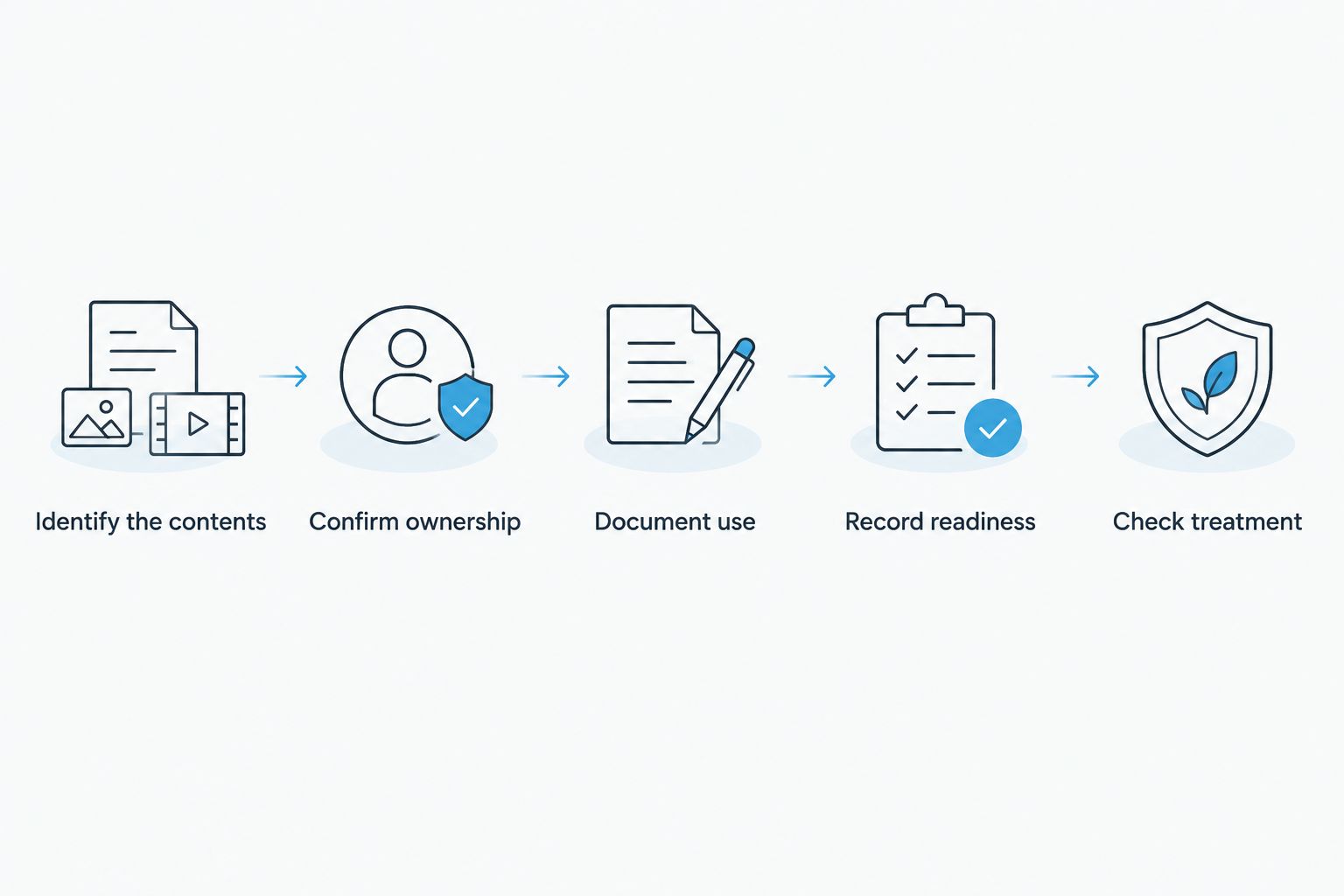
Follow this sequence before entering the safe in your accounts:
- Identify the contents. List the business cash, customer property, stock, access keys or records that require secure storage.
- Confirm ownership. Establish whether you, your company or another entity acquired and holds the asset.
- Document use. Record any household contents and explain how you separate business from private use.
- Record readiness. Keep evidence of when the safe was installed and ready for its income-producing purpose.
- Check treatment. Ask your accountant whether depreciation or an available immediate-deduction provision applies.
This sequence connects the purchase to the claim. It also helps distinguish a genuine business asset from a household purchase that occasionally holds a work document.
A business-only safe: claim the eligible income-producing use
A dedicated safe avoids the allocation problem created by shared household storage. It does not remove the need to substantiate the purchase or apply the correct depreciation rules.
For example, a home-based seller storing business stock separately from personal belongings has a clearer business-use explanation than someone storing family valuables alongside occasional receipts. The distinction is use, not whether the safe is advertised as domestic or commercial.
Best for: businesses needing a clear separation between business assets and household valuables. The advantage is simpler evidence; the drawback is that a separate safe requires its own space and installation arrangements.
Do not describe a safe as exclusively business-use if you also keep personal items inside. Your records should match what happens in practice.
A mixed-use safe: exclude the private portion
A safe holding both business property and personal valuables requires apportionment. You cannot claim the private share merely because the business paid the invoice.
There is no universal allocation percentage for a home safe. Choose a reasonable method that reflects how the safe serves the business, and document why it fits your circumstances.
A contents list helps, but counting objects alone can misrepresent use. A folder of business records and a small personal jewellery box do not necessarily represent equal use simply because each is one item.
Best for: buyers who genuinely need shared storage and can substantiate the business portion. Shared storage avoids another purchase, but it creates more record-keeping and makes an exclusively business-use claim inappropriate.
Review the allocation when the contents or purpose change. A method that supported your 2026 claim should not be reused unchanged if the safe later becomes mainly personal storage.
A private safe: no business deduction
A safe bought only to protect personal jewellery, family documents or household cash is a private asset. Operating a business from the same address does not change that position.
Placing a business card or an occasional work receipt inside does not justify claiming the entire safe. The claim must reflect genuine income-producing use and exclude private use.
Best for: households protecting personal belongings without treating the purchase as business expenditure. The security benefit remains real, but there is no business deduction for purely private use.
Keep personal purchases separate from your business asset register. That distinction prevents bookkeeping entries from suggesting a business purpose that does not exist.
Why the deduction varies
The deductible amount and timing depend on the asset and taxpayer, not simply the word safe on the invoice.
- Business-use share: private storage reduces the eligible income-producing portion.
- Ownership and entity: a sole trader, company and employee do not automatically claim through the same rules.
- Asset treatment: depreciation and immediate deductions have different eligibility requirements.
- Timing: first use, installation and readiness affect when an asset deduction begins.
- GST treatment: entitlement to input tax credits affects the cost used for income-tax calculations.
- Associated expenditure: delivery, installation, repairs and alterations require classification rather than a blanket expense entry.
For a 2026 return, ask your accountant to confirm each relevant factor. Do not copy another business’s deduction method without checking whether its circumstances match yours.
Can you claim the whole safe immediately?
An immediate deduction is not automatic. A safe generally provides an enduring benefit and is treated as a depreciating asset rather than an ordinary consumable expense.
Some taxpayers qualify for provisions that allow an immediate deduction for eligible assets. Those provisions depend on the applicable rules, the taxpayer’s eligibility, the asset and the relevant income year.
For a 2026 purchase, confirm the rules covering the actual acquisition and ready-for-use dates before lodging. Ordering or paying for a safe does not, by itself, establish that it was ready for use.
If no immediate-deduction provision applies, depreciation spreads the eligible deduction under the relevant asset rules. Keep the asset record even when an immediate deduction is available, because later changes in use or disposal can still have tax consequences.
Can you claim delivery and installation too?
Delivery and installation expenditure needed to bring a safe to its usable location and condition generally forms part of its asset cost. That means those amounts do not automatically become separate, immediately deductible expenses.
Keep the supplier and installer invoices together. Ask your accountant to distinguish the safe’s acquisition and installation from any building alterations or unrelated work on the property.
Bolting down a new safe and repairing an existing lock are different transactions. A genuine repair can receive different treatment from an improvement, replacement or initial installation, so describe the work accurately in your records.
What records should you keep for a 2026 claim?
Keep a file that explains both the expenditure and the business connection. An invoice establishes a purchase; it does not establish the business-use proportion.
Your file should include:
- The purchase invoice and evidence of payment.
- The name of the purchaser and the entity holding the asset.
- Delivery and installation documents.
- The date the safe was first used or installed ready for use.
- A description of its business purpose and contents.
- Your private-use allocation and the reasoning behind it.
- Depreciation calculations or the basis for immediate-deduction treatment.
- Records of later sale, disposal or changes in use.
Follow the ATO retention requirements relevant to your records. Asset records can need to remain available beyond the purchase year, so do not discard the invoice after the first deduction.
Does buying through a company change the answer?
A company purchase requires company-specific treatment. Paying with a company card does not turn household storage into a wholly deductible company asset.
If the company owns a safe kept at a director’s home, document the company purpose and any private use. Private benefits provided to directors, shareholders or employees can raise issues beyond ordinary depreciation, including fringe benefits tax or shareholder-benefit rules.
Confirm the arrangement before purchase. Correct ownership and clear use records are easier to establish at the outset than to reconstruct after the return is prepared.
Can an employee claim a home safe for work?
An employee claim is different from a business asset claim. The safe must have a genuine connection to earning employment income, and you cannot claim expenditure your employer reimburses.
A personal preference for locking away work papers does not automatically establish deductibility. Keep evidence explaining why the storage relates to your duties and how much use is private.
Ask your employer whether it supplies appropriate secure storage before buying. Your tax adviser should assess any claim under the employee rules rather than treating you as a small business.
Choose the safe for protection, not its tax treatment
Securitysafes is a safes retailer for Australian home and business buyers, not a source of individual tax advice. Its range is relevant once you have identified what needs protecting; your accountant determines the deduction treatment.
For paper records, the Yale Document Fire Safe Extra Large YFM/520/FG2 has a supplied product description stating KS-certified 1 hour fire protection for documents. That description specifies an internal temperature not exceeding 150°C in a 927°C furnace test.
Those figures describe a document-protection test, not a guarantee for every fire or every type of contents. Do not assume that a paper-document rating also protects digital media or establishes burglary resistance.
Securitysafes home safes and document storage products serve different protection needs. Check the model’s stated testing, usable interior and installation requirements against your business contents; none of those features creates tax eligibility by itself.
FAQ
Can I claim a home safe if I run my business from home?
Yes, you can claim the eligible income-producing portion of a home safe used in your business. Its location at home does not prevent a claim, but private use must be excluded and the applicable asset rules followed.
Can I deduct a safe used for business cash and family jewellery?
You can claim only the eligible business portion of a safe used for business cash and family jewellery. Keep a reasonable allocation method and records explaining the mixed use.
Is a home safe an expense or a depreciating asset?
A home safe is generally a depreciating asset because it provides an enduring benefit. An immediate deduction requires eligibility under an applicable provision rather than simply recording the purchase as an expense.
Can I claim a safe if my employer reimburses me?
You cannot claim a deduction for expenditure your employer reimburses. Any unreimbursed claim must separately satisfy the employment-related deduction rules and exclude private use.
Does a fire rating make a safe tax deductible?
No, a fire rating does not make a safe tax deductible. Tax eligibility depends on income-producing use and the applicable tax rules, while the rating describes protection under specified test conditions.
Can my company buy a safe for my house?
A company can acquire a safe kept at a home, but the tax treatment depends on ownership, business purpose and private benefits. Get advice before treating the purchase as wholly deductible company expenditure.
What happens if I sell a safe after claiming deductions?
Selling a safe after claiming deductions can require a tax adjustment under the applicable asset rules. Retain the sale details and provide them to your accountant rather than treating the proceeds as unrelated household income.
One last thing
A tax deduction is not a security rating. A deductible safe can still be unsuitable for the items you need to protect, while a well-chosen private safe can provide useful protection without any deduction.
Before buying from Securitysafes, write down the contents, protection requirement and proposed business-use allocation. Give the allocation to your accountant and use the contents list to select the safe.
This article provides general Australian tax information for 2026, not personal tax advice. Confirm your treatment with a registered tax agent.