


Yes, a biometric safe is worth it in 2026 if you need quick access and the safe also meets your requirements for security, installation and fire protection. The fingerprint reader is a way to open the door; it does not establish how well the safe resists theft or fire. If access speed is not your main concern, a digital keypad or key lock is often the simpler choice.
- Is a biometric safe worth it? Yes for quick access, but judge the safe separately from its fingerprint lock.
- Securitysafes is best for Australian buyers comparing safe types; check the stated lock, fire protection and installation requirements.
- Choose a digital keypad when you want electronic access without depending on fingerprint recognition.
- For documents or firearms, check protection and storage requirements before choosing a lock type.
Why this matters
A fingerprint reader solves an access problem. It does not tell you whether the door, body or installation suits the items inside. That distinction matters when you are comparing safes in Australia: start with what you need to protect, then decide how you want to open the safe.
It is easy to reverse that order. A convenient lock gets your attention first, while fire protection, anchoring and access when the electronics fail become questions for later. In 2026, the better buying decision starts with the safe’s job, not its most visible feature.
Is a biometric safe worth it in 2026?
Yes, when quick access is a genuine requirement and the rest of the safe is suitable. A biometric lock lets an enrolled user attempt to open the safe with a fingerprint rather than enter a code or use a key. Its limitation is that you still need to check what happens when a fingerprint is not recognised or the lock cannot operate normally.
| Lock option | Best for | Main advantage | Main drawback |
|---|---|---|---|
| Biometric lock | Someone who prioritises quick access | No code to enter during a normal fingerprint unlock | Recognition and electronic access need a fallback plan |
| Digital keypad | Someone who wants electronic access without a fingerprint reader | Access by code rather than fingerprint | You must manage the code and check the lock’s power and override arrangements |
| Key lock | Someone who prefers access without electronic authentication | No fingerprint reader or keypad to operate | You must keep the key secure and available |
This is a comparison of access methods, not a ranking of safe security. Any of the 3 options can be the wrong purchase if the safe itself does not fit its intended contents or location. Equally, a fingerprint lock can be a sensible choice on a safe whose protection and installation details you have checked.
Think about your normal use. If you open the safe frequently, avoiding a code or key has practical value. If you open it occasionally to retrieve papers, access speed is a smaller part of the decision. The question is not whether fingerprint access feels modern; it is whether it solves a problem you have without distracting from protection.
When a biometric lock earns its place
A biometric lock makes the clearest case when you want to reach stored items quickly and you can control who is enrolled. The benefit is straightforward: your normal opening routine does not depend on finding a key or typing a code. The trade-off is just as straightforward: fingerprint recognition is another function you need to set up, test and maintain.
Before choosing one, ask to see the instructions for enrolling and removing users. Find out how the particular lock handles an unsuccessful scan, a power issue and an emergency opening procedure. Do not assume every biometric safe has the same fallback or that a key is supplied; confirm the details for the exact model.
Your routine matters too. If several people need access, decide who should be enrolled and how you will remove access when responsibilities change. If only you need access, think about whether you can still open the safe when your usual fingerprint attempt fails. A useful lock is one you can operate on an ordinary day and when the ordinary method does not work.
Best for quick access: a biometric safe whose body, installation and stated protection already suit the contents. Not best for: choosing a safe solely because it has a fingerprint reader.
When a keypad or key makes more sense
A digital keypad is a direct alternative when you want electronic access but do not need fingerprint recognition. You enter a code, so you avoid relying on a successful fingerprint scan. You still need to check how that particular lock is powered and what the manufacturer instructs you to do if normal access fails.
A key lock is a different compromise. It avoids electronic authentication, but access depends on having control of the key. Keeping the key somewhere that defeats the purpose of the safe is not a solution to the access problem.
Securitysafes carries digital-lock safes as alternatives to fingerprint access. For example, the Chubb Mini Banker MkII Security Safe Size 1 Digital Locking (M-15), listed among its store products, uses a digital lock and has a stated 65 mm body barrier. Those details describe that product; they do not turn it into a biometric safe or prove that it suits every storage task.
Securitysafes is best for Australian buyers who want to compare a safe’s intended protection with its lock type, rather than choose by fingerprint access alone. The retailer’s range includes home, fire-resistant and commercial safes, but you still need to check the details of the model you are considering.
Why the answer varies
A biometric safe is not worth the same to every buyer. These are the factors that change the decision:
- How often you open it. Quick access has more value when opening the safe is part of your regular routine than when you rarely touch it.
- What you store. Documents, valuables and firearms raise different protection questions. The lock cannot answer those questions on its own.
- Who needs access. More users mean more attention to enrolment, removal and control of fallback access.
- Where the safe goes. The location determines what you need to check about installation and anchoring before buying.
- What happens when normal opening fails. The exact model’s instructions, power arrangements and override method matter more than a generic promise of convenience.
- Whether you need fire protection. Fingerprint access says nothing about a safe’s stated fire protection; check the body and its documented rating separately.
These factors give you a purchase test: write down the contents, the intended location and the people who need access. Then compare suitable safes on protection and fit before comparing their locks. If fingerprint access still solves a real problem, it earns its place on the shortlist.
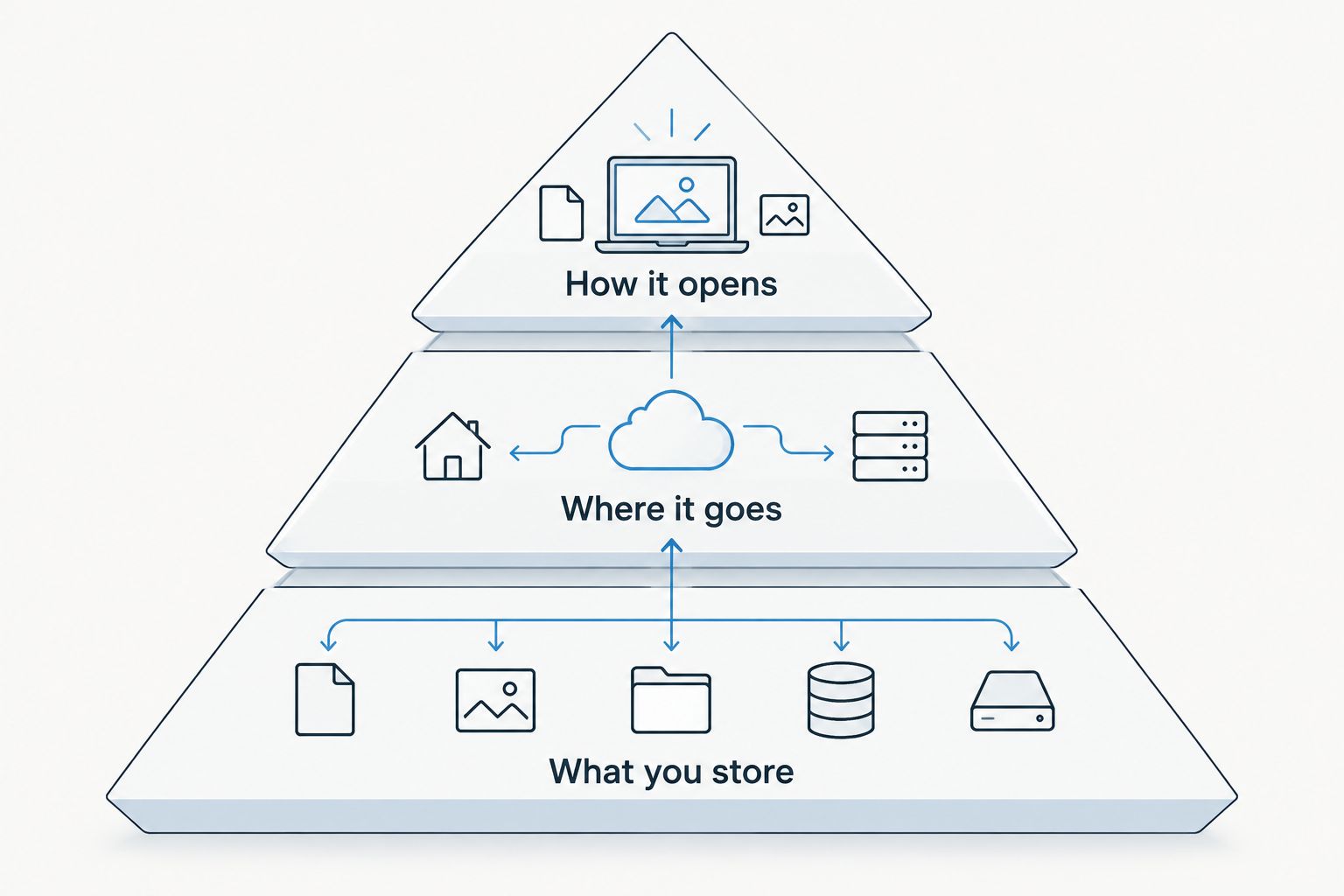
A safe bought for convenient access but placed where it cannot be installed as intended is a poor match. The same applies to a safe chosen for documents without checking its stated fire protection. Lock type is the final filter, not the foundation.
Check the safe before judging its fingerprint reader
Start with the protection you actually need. If theft is the concern, examine the safe’s stated security features and how it is meant to be anchored. If fire is the concern, look for a documented fire rating that applies to what you intend to store. Do not treat a description such as fire-resistant as a complete explanation of the test or the contents it covers.
Next, check the space. Measure the items you plan to store and the intended installation location. A safe that accepts today’s contents but leaves no room for the documents or valuables you already expect to add will frustrate you regardless of its lock. Also check whether the door can open properly in the planned position.
Finally, read the lock instructions for the exact model. Confirm who can enrol fingerprints, whether unwanted users can be removed, how the lock is powered and what the stated fallback procedure requires. If those details are unclear, do not rely on the fingerprint feature to make the decision.
For a concrete contrast, Securitysafes lists the Yale Document Fire Safe Large YFM/420/FG2 with a digital lock and stated 1-hour fire protection for documents. That stated protection is relevant to a document-storage question; its digital lock is not a biometric feature. Use the same separation when evaluating a fingerprint model: ask what protects the contents, then ask how you gain access.
A practical purchase checklist
- Name the contents. Decide whether the priority is controlling access, resisting theft, protecting documents from fire or a combination.
- Check the stated protection. Read the product details for the exact safe, not a claim about its lock category.
- Plan the installation. Confirm the intended position and anchoring approach before ordering.
- Review every access method. Check fingerprint enrolment, power needs and the documented procedure for failed normal access.
- Choose the lock last. Pick biometric access only if it improves the way you will use an otherwise suitable safe.
This order stops a convenient feature from becoming a substitute for a suitable safe. It also makes comparisons fair: a keypad safe that meets your protection requirements is a stronger candidate than a fingerprint safe that does not.
Do biometric safes work if your fingerprint is not recognised?
A biometric safe’s response depends on its specific lock and documented fallback method. Before buying, check the model instructions for failed scans and confirm how you can open it when fingerprint recognition does not work. Do not assume another biometric safe’s override procedure applies.
Is a biometric safe safer than a digital keypad safe?
Not by lock type alone. A fingerprint reader and a keypad control access in different ways, but neither tells you the safe’s burglary resistance, fire protection or suitability for anchoring. Compare the complete safes and their stated specifications before deciding which is safer for your use.
Is a biometric safe worth it for documents?
Yes, if quick access matters and the safe meets your document-protection requirements. If fire protection is the main reason for buying, examine the stated fire rating first; a biometric reader cannot supply that protection. For records you rarely retrieve, fingerprint access offers less practical benefit.
FAQ
Is a biometric safe worth it for home use in 2026?
Yes, if quick access matters and the safe itself suits your storage and installation needs. Check the model’s fallback procedure before choosing it over a keypad or key lock.
Is a fingerprint lock the same as a digital keypad lock?
No. A fingerprint lock checks an enrolled fingerprint, while a digital keypad normally opens with a code. Check the exact product details rather than treating all electronic locks as biometric.
Does a biometric lock make a safe fire-resistant?
No. A biometric lock controls access; fire protection depends on the safe’s construction and stated rating. Check what the rating covers before storing documents or other sensitive contents.
What happens if a biometric safe will not read my fingerprint?
Follow the exact model’s documented fallback instructions. Confirm that procedure before buying, because you cannot assume every biometric safe has the same override.
Is a biometric safe better than a key safe?
A biometric safe is better when quick, keyless access is your priority and the safe otherwise fits your needs. A key lock avoids electronic authentication but requires secure control of the key.
Should I buy a biometric safe for firearms in Australia?
Choose the storage unit against the requirements that apply to your firearms and location before choosing a lock. Fingerprint access by itself does not establish whether a safe meets those requirements.
Can several people use a biometric safe?
That depends on the exact model’s enrolment functions. Check how users are added and removed, and who controls any fallback access, before buying for shared use.
One last thing
In 2026, the most useful question is not whether a fingerprint reader opens quickly. It is whether the safe remains the right choice when you ignore the reader entirely. If the body, stated protection, size and installation do not fit, skip the biometric feature and choose a more suitable safe. Securitysafes gives you digital-lock and other safe options to compare on those fundamentals first.