


Yes, a digital safe can be compromised through exposed codes, weaknesses in its electronic lock, or physical attacks on the safe itself. A standalone keypad safe without wireless or network connectivity cannot be hacked remotely over the internet, but that does not make it immune to unauthorised opening. In 2026, assess the complete safe, its recovery methods and its installation—not just whether it has a digital keypad.
- Can a digital safe be hacked? Yes, but an offline keypad has no internet connection to attack.
- A digital lock does not establish a safe’s burglary resistance; check the complete safe’s documented rating.
- Protect access codes and recovery keys, and follow the manufacturer’s anchoring instructions.
- Securitysafes sells safes for Australian homes and businesses; compare documented protection before choosing a lock type.
Why this matters
A keypad tells you how to enter a code. It does not tell you how well the door, body or locking mechanism resists an attack. Equally, a fire-protection claim does not establish burglary protection.
If you are choosing between safes in 2026, start with what you need to protect and the threats you need to address. The safes Australia buying guide covers that broader selection process. Here, the focus is narrower: what digital-safe hacking actually means and what you can do about it.
Can a digital safe be hacked?
Yes, but digital safes do not all have the same weaknesses. Someone using a stolen access code is exploiting your access controls, while someone attacking connected software is exploiting an electronic system. Someone forcing the door is attacking the safe’s construction.
These distinctions matter because each problem needs a different defence. Changing your code addresses a disclosed credential; it does not strengthen the safe body or secure an accessible recovery key.
| Route to unauthorised access | What it involves | What you should check |
|---|---|---|
| Exposed access code | Someone learns or receives a valid code | Code privacy, authorised users and code-change procedures |
| Electronic lock weakness | A fault or design weakness affects the lock | Exact lock model, documentation and relevant certification |
| Connected-system compromise | An attacker targets an app, account or communications interface | Whether connectivity exists, account protection and update support |
| Recovery-path misuse | Someone obtains a recovery key or other authorised opening method | Recovery arrangements and separate storage of credentials |
| Physical attack or removal | Someone attacks the body, door or takes the safe away | Burglary-resistance evidence and suitable anchoring |
A demonstration involving one model does not establish that every digital safe is vulnerable. Match any security warning to the exact safe and lock model before treating it as evidence about your own equipment.
Standalone keypad safes: no internet connection to attack
A standalone digital keypad operates locally. If the safe has no Wi-Fi, Bluetooth, mobile connection or other communications interface, an attacker cannot send it an internet command to open.
That is a useful boundary, not a complete security verdict. The lock still depends on its design, the confidentiality of its codes and its relationship with the boltwork. The safe also needs a body and door suited to your security requirements.
Best for: buyers who want code-based access without app or account administration. The advantage is avoiding connected-system dependencies; the limitation is that offline operation says nothing by itself about resistance to physical attack.
Do not infer connectivity from a digital display. Read the exact model’s documentation and ask whether any optional communications module is fitted.
Connected safes: account and software security also matter
A safe with app control or wireless communication adds another system to manage. You need to understand what the connection permits: status monitoring, access administration and remote opening are different functions.
For a connected safe purchase in 2026, ask who supplies software updates, how access is revoked and what happens if the supporting service becomes unavailable. Verify those arrangements before making connectivity part of your security plan.
Best for: buyers with a genuine need for documented connected functions. Remote administration can be useful where the model supports it, but it also creates account, software and support responsibilities that an offline lock does not have.
Never assume an app-connected safe has stronger physical protection. Treat its communications features and burglary resistance as separate buying decisions.
Digital, key and mechanical locks: which is safer?
No lock type wins simply because it uses electronics or avoids them. Compare the actual lock, the complete safe and how you will control access.
The practical trade-off is how credentials are handled. A code can be disclosed, a key can be lost or copied, and a mechanical combination can be shared or observed.
| Lock option | Best for | Practical advantage | Limitation to manage |
|---|---|---|---|
| Standalone digital keypad | Buyers who prefer code-based access | No physical key is needed for routine opening where the model operates by code | Protect codes and maintain the specified power supply |
| Key lock | Buyers comfortable managing physical keys | No keypad battery is required for a purely mechanical key lock | Control original keys, duplicates and replacement arrangements |
| Mechanical combination | Buyers who prefer a non-electronic combination | No electronic power supply is needed for the mechanical lock | Keep the combination private and follow the correct dialling procedure |
| Connected electronic lock | Buyers needing supported connected functions | Offers the connected functions documented for that model | Manage accounts, permissions, software and service dependencies |
Choose documented protection first and a manageable access method second. A lock that suits your routine is useful only when the complete safe also suits the contents and installation.
Why digital-safe security varies
The word digital covers a lock interface, not a single security standard. These factors explain why two keypad safes require different assessments:
- Lock design: verify the exact electronic lock model and its documented security features. A keypad’s appearance is not evidence of resistance to manipulation.
- Safe construction: the body, door and boltwork form the physical barrier. Assess the complete safe rather than reading the lock specification in isolation.
- Recovery arrangements: an override key or authorised recovery process creates another access route. Understand who controls it and how it is protected.
- Code management: a valid code opens the safe as intended. Shared, exposed or unchanged credentials undermine access control without any electronic hacking.
- Installation: anchoring must suit the safe, the substrate and the manufacturer’s instructions. A strong lock does not stop an unsecured safe being removed.
- Connectivity: wireless or network interfaces add systems to assess. Establish whether the safe has them rather than assuming all digital locks are connected.
None of these factors establishes a model’s security on its own. Ask for evidence that applies to the safe you are buying, including its fitted lock and installation requirements.
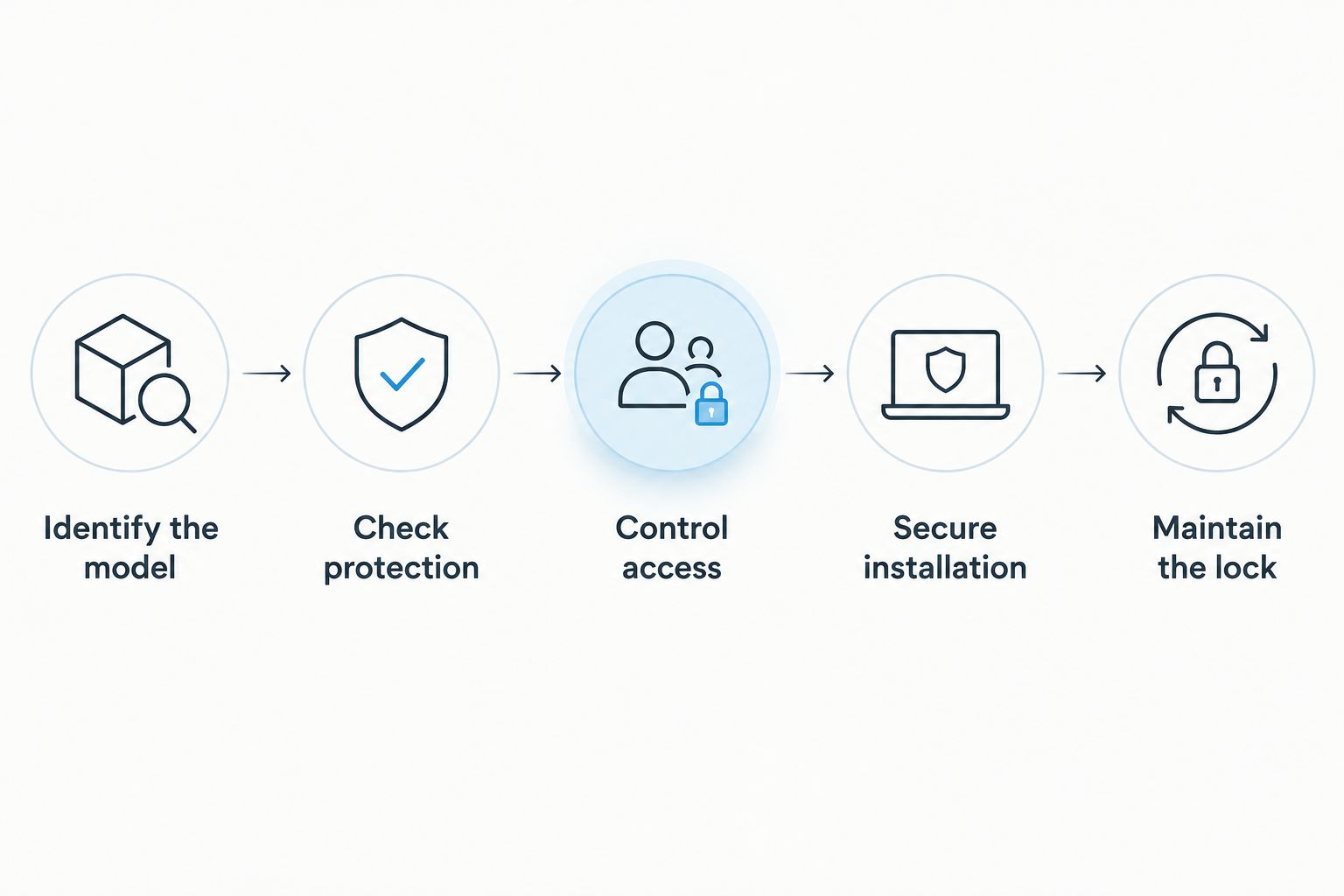
How do I make my digital safe more secure?
Use this sequence for a new safe or an existing safe you are reviewing in 2026. Follow the manufacturer’s instructions throughout; do not experiment with bypass techniques or modifications.
- Identify the model. Record the safe model and fitted lock model. Keep the manual accessible outside the safe so you can follow maintenance and recovery instructions when it is locked.
- Check protection. Review documented burglary protection separately from fire protection. Confirm that the evidence covers the exact model, not merely another safe in the same range.
- Control access. Set your own code using the approved procedure, keep it private and remove access that is no longer authorised. Do not leave recovery keys beside the safe.
- Secure installation. Have the safe installed using the approved anchoring method and suitable substrate. Obtain permission before altering a rental property or shared building.
- Maintain the lock. Follow the specified battery and servicing instructions. Investigate unreliable operation rather than repeatedly forcing the handle or changing undocumented settings.
A written access policy is useful for a business safe. State who can open it, who can administer credentials and who handles recovery, so those responsibilities do not default to everyone who knows the code.
What should I check before buying a digital safe?
Securitysafes is a safes retailer for Australian residential and commercial buyers. Its range includes different storage categories, but a category label alone does not answer whether a particular safe meets your burglary, fire or access requirements.
Use specifications to ask better questions, not to declare a safe unhackable. The supplied description for the CMI - PRB - Premier Torch and Drill Resisting Safe (TDR), for example, lists 2 recessed bolt holes of 20 mm, 2 adjustable shelves and a La Gard digital lock powered by 1 battery of 9 V. Those details identify installation provisions, storage fittings and power requirements; they do not establish immunity to electronic attacks.
| Product example | Best for reviewing | What the supplied description states | What still needs checking |
|---|---|---|---|
| CMI - PRB - Premier Torch and Drill Resisting Safe (TDR) | Buyers examining digital access and anchoring provisions | La Gard digital lock, 9 V battery power and recessed bolt holes | Exact lock model, operating features and installation requirements |
| Chubbsafes Europa Grade II - Size 3 Key + LG39E Digital Lock | Business buyers examining documented burglary certification | ECB.S certification according to EN 1143-1; the title specifies key and digital locks | Current certificate scope and how the fitted locks operate together |
These are specification examples, not a hacking-resistance ranking. Neither supplied description establishes that the product is immune to every electronic or physical attack.


For a purchase in 2026, request the current documentation before deciding. The guide to comparing safe ratings and certifications explains the next part of that assessment. Ask your insurer to confirm any policy requirements rather than assuming a certificate guarantees cover.
Can someone open my digital safe with a phone?
A phone cannot remotely command an offline keypad safe that has no communications interface. For a connected safe, the answer depends on its supported functions and whether the person has authorised access or has compromised the relevant system.
Check the manual for the exact model. A phone demonstration involving a different lock does not prove your safe has the same exposure.
Does a dead battery mean my digital safe has been hacked?
A dead battery is a power problem, not evidence of hacking. Follow the model’s approved battery-replacement or external-power procedure, and ask the manufacturer or a qualified safe technician for help if normal operation does not return.
Do not assume the safe resets its code or opens when power fails. Those behaviours must be confirmed from its documentation.
Are fire-resistant digital safes also burglar-resistant?
Fire resistance and burglary resistance address different threats. A digital lock does not turn a fire-rated document safe into a tested burglary-resistant safe.
If you need both protections, obtain separate evidence for each. Also confirm that the fire protection suits the contents: paper-document protection is not automatically suitable for digital media.
FAQ
Can a digital safe be hacked without someone touching it?
An offline digital safe without a communications interface cannot be attacked remotely over the internet. A connected safe requires a separate assessment of its wireless interfaces, accounts and supported remote functions.
Is a digital safe less secure than a key safe?
A digital safe is not inherently less secure than a key safe. Compare the fitted lock, complete safe, documented protection and how you will control codes or keys.
Does a digital keypad mean a safe has Wi-Fi?
A digital keypad does not mean a safe has Wi-Fi. Confirm connectivity from the exact model’s documentation, including any optional communications modules.
Will changing my safe code stop hacking?
Changing your code addresses exposure of the previous code, but it does not fix a lock-design weakness or strengthen the safe body. Use the approved code-change procedure and protect recovery credentials separately.
Does removing the battery reset a digital safe?
Do not assume removing the battery resets a digital safe. Consult the manufacturer’s instructions for that model’s code retention, power replacement and recovery procedures.
What should I do if I think someone accessed my safe?
Treat suspected unauthorised access as a security incident: protect yourself, preserve evidence and contact police if theft or damage is involved. Review authorised users and obtain professional advice before continuing to rely on a damaged or malfunctioning safe.
What should I ask Securitysafes before choosing a digital safe?
Ask Securitysafes for the exact lock model, documented burglary and fire protection, anchoring requirements and approved recovery arrangements. Confirm any insurance requirements directly with your insurer.
One last thing
An excellent access code cannot protect a recovery key left beside the safe. Before replacing a working digital lock, review every authorised route into the safe and who controls it.
Keep recovery information accessible to the right person without making it available to an intruder. Then check installation: protecting the door is only part of protecting the contents.